
$32.00 each
Available
Please note Whilst all care has been taken to provide you with a good indication of colour, you should always sight product samples before use, due to natural variations in Colours & Sizes. Products may vary from image provided.
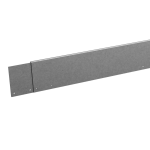
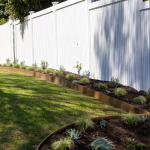
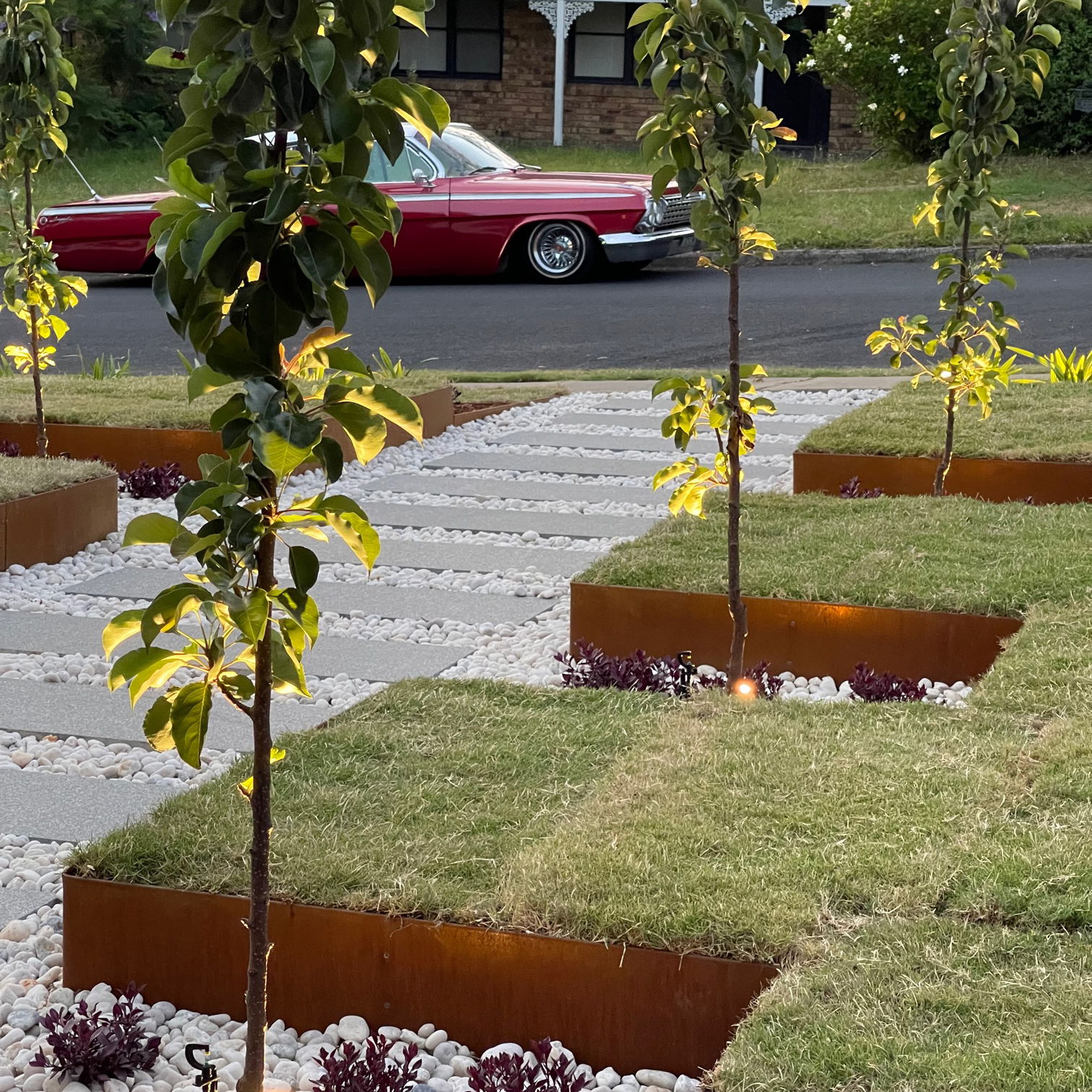
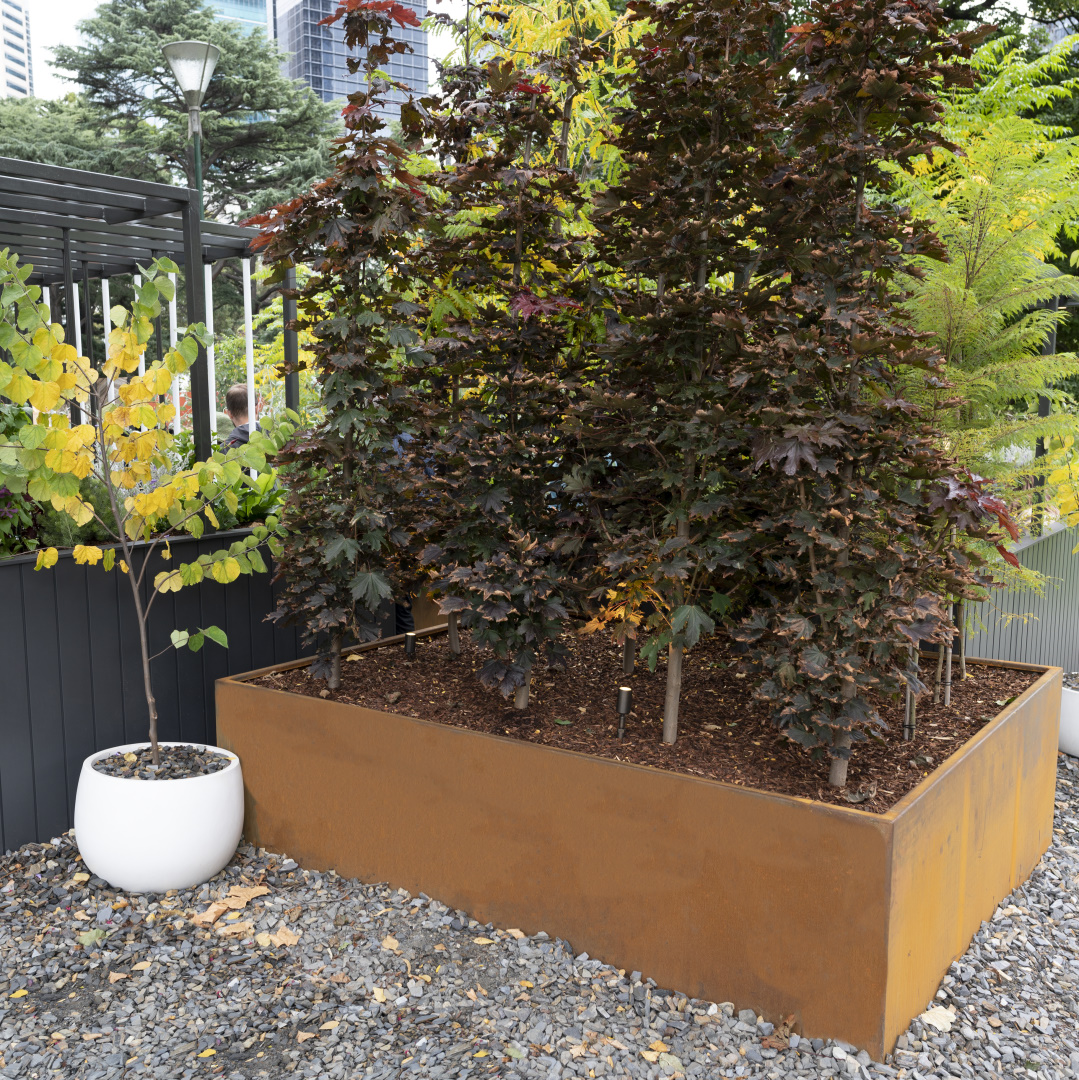
Australian made SHAPESCAPER Steel Edging are a modular steel landscaping system that will make working on your next project a pleasure, turning your great ideas into reality! Manufactured in Australia using Australian BlueScope Steel, suitable for both domestic and commercial landscaping installations. Available in eight heights, ranging from 75mm through to 590mm.
Designed to completement your SHAPESCAPE steel edging, these External Corners help you achieve perfect 90-degree corners to ensure a clean and consistent finish to all your garden edging. These corners are also available in Internal Corners in the same eight heights.
| Weight | 2.30 kg |
|---|---|
| Material | |
| Supplier | |
| Suitable for |
Prepare the site
– Establish a datum or reference point for levels and contours
– Measure and mark out the area, step back to visualize the full context of your design
– Layout your edging and stakes along the run to find the best location for joins and any required cuts
– We recommend the use of a sealing compound such as Crommelin Blackseal Heavy Duty bitumen paint on any edging below ground level
– Check for underground services or obstructions like roots
– Prepare a trench to a minimum depth of 50mm
Cutting and shaping the edging
– Mark planned cuts and double-check measurements
– Cuts are easily made using an angle grinder with a thin stainless steel cutting disc
– 185mm edging can be formed into gentle curves with a radius down to 500mm onsite. Use your body weight to gently and gradually bend the edging. Hold the end of the edging up with one hand while running your other hand along the edging with downward pressure to form the curve. Work in small increments, slowly adding to the shape of the curve. If you over-shaped a curve simply apply pressure in a similar way from the other side to reduce the radius of the curve and maintain the correct line
– Tighter curves should be custom ordered and can be rolled down to a radius of 250m
Hand shaping 90-degree corners and other angles
– Do not score the edging with an angle grinder when forming tight bends; this is unnecessary and weakens the corner.
– Edging up to 185mm in height can be easily bent onsite.
– Achieve neat corners by marking the position at least 300mm from the end of a length. This will allow enough leverage to easily start bending the edging.
– Place a stake across the edging at the marked position and place your feet as close to the sides of the edging as possible to secure the stake.
– Avoid straining your back by using your knees and legs muscles to bend the edging slightly over 90 degrees, then adjust to the desired angle.
– Using a small piece of wood or similar under the end of the edging will make it easier to get your fingers underneath to start the bending process.
– The top part of the bend will have a neatly tucked-in curved lip.
– The lower part of the edging will have a gently rounded flare, which will be below ground level.
90-degree corners are also available as stock items
– External (lip on the inside SECE18520)
– Internal (lip on the outside SECI18520)
Installing and securing the edging
– Select 3 or 4 stakes per length as needed (SS400R) Ribbed Stakes
– 3 stakes are suitable for most applications; 4 stakes may be required for long straight runs, or if installing in loose or sandy soil.
– Fit a connector to each edging length using two of the supplied hex head self-tapping screws, this can be done prior to putting any edging into the ground
– Use the lower holes in the edging to align with the holes on the stakes
– Use a string line to ensure the stakes are driven to the required depth and positioned perfectly along the length of the run
– Taking care to maintain the spacing use a “dead blow” hammer or rubber mallet to guide each stake down to the correct depth
– Position the edging over the top of the stakes and secure to the previous connector
– Use the lower holes on the edging to align with the lower holes on the stakes and fit the stakes using the supplied hex head self-tapping screws
– If the stakes holes don’t align with the existing edging holes simply screw into the edging using the holes in the back of the stakes as a guide
Final adjustments and finishing touches
– Backfill and compress along the front of the edging then back fill the rear section
– To accelerate the protective “rust” patina you can wash down the face of the edging with a mild detergent and then apply a 10% white vinegar solution.
– The edging will start developing a patina in about two weeks and become fully weathered between 6 months and two years depending on exposure to moisture. The use of stronger acid or salt will permanently damage the protective properties of weathering steel